Wednesday, October 9, 2013

Clare Strand - SKIRTS


It is always a pleasure when something arrives in my post office box that looks like a book. A photobook to be precise. And so it was this morning with the unexpected arrival of Clare Strand's new bookwork SKIRTS. Thank you Clare.

Clare Strand is a conceptual artist. Her work deals with the nature of things and her photographs do what photography does best - an examination of the ordinary and the mystery to be found in the everyday. Phillipe Starck says in his introduction to SKIRTS, one of art's distinctions is to provide maximum emotion using minimum means. Clare Strand delivers. Strand's work is simple yet substantial and wryl intelligent, and thankfully avoids the cleverness that I increasingly see in work, generally made by photographers in the absence of an idea.

Subject matter dominates her work – photography and film are the mediums through which her enquiries are mapped. Strand is interested by imagery in which the aesthetic are secondary to function. Taking inspiration from forensic imagery, instruction manuals, the conventions of signage, the mechanics of spirit photography and photography employed to offer evidence of an event or a task, her work treads the uncertain boundaries between the expected and the absurd.

SKIRTS is a beautifully realized hardback work published by GOST in an edition of 500 copies. It is available from PHOTOBOOKSTORE in the UK - HERE.

You can see more on Clare Strand's website - HERE.


Monday, October 7, 2013

My new book - SOME THINGS YOU SHOULD HAVE TOLD ME - where to get it


This post in particular is for those in New Zealand interested in getting their hands on a copy of my new book SOME THINGS YOU SHOULD HAVE TOLD ME, published by Dewi Lewis in the UK. There will be no distribution of this book in NZ. Instead the book is easily obtainable from these online outlets:

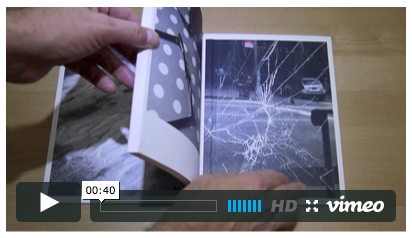
PHOTOBOOKSTORE in the UK, HERE, where you can see a vimeo run through of the book.


Book Depository in the UK, HERE, who also have a range of my other books works.


amazon USA, HERE, also with a range of my books.

For anybody interested in any of my small edition, self published artist's books, I still have a few copies left of some of the titles and for purchase I can be contacted directly.

William Eggleston once asked Harvey Benge - What are you doing these days? Photographing the urban social landscape, said Benge. Don't talk bullshit; what are you doing? Eggleston insisted. Making strange pictures in cities, replied Benge. However you look at them, Harvey Benge's photographs are mostly urban and generally strange. His work is mysterious; nothing is solid. The pictures capture contrasts and conflicts which leave you wondering what has just happened and what might happen next. He gives voice to the mundane and overlooked. His open-ended photographic sequences record small moments of everyday life that flash past with tension and ambiguity: an urban dream on the edge of reality where figures retreat, seats are empty, phones don't work. Any and every interpretation is a valid interpretation. What is going on? You decide. With photographs made in Paris, London, New York and Rome, this new intensely personal, some might say autobiographical book, is enigmatically entitled 'Some Things You Should Have Told Me'. It is a remorseless meditation on loss and misadventure, pain and impermanence, the inevitability of change. Questions are asked; there are no answers.

Friday, October 4, 2013

Christian Patterson, Alessandra Sanguinetti, Raymond Meeks, Wolfgang Tillmans - TBW Subscription series #4


TBW books have just announced their latest subscription series, number 4, with bookworks from Christian Patterson, Alessandra Sanguinetti, Raymond Meeks and Wolfgang Tillmans. Each case-bound book is 9 x 11 inches and runs to 40 pages.

BOOK #1 Christian Patterson, Bottom of the Lake
With Bottom of the Lake, Christian Patterson revisits his hometown of Fond du Lac, Wisconsin (French for "Bottom of the Lake") and weaves together visual threads related to the town's iconography, climate and culture.Christian Patterson lives in Brooklyn, New York. His monograph, Redheaded Peckerwood, was published by MACK in 2011 to international critical acclaim, nominated for the 2012 Kraszna-Krausz Book Awards and won the prestigious 2012 Recontres d’Arles Author Book Award. He was awarded a John Simon Guggenheim Memorial Foundation Fellowship in 2013.

BOOK #2 Alessandra Sanguinetti, Sorry, Welcome
Sorry, Welcome is a glimpse into the artists life the way it looked throughout the winter of 2012/13. Sanguinetti shot over a short period of time in which she took a step back and became a voyeur of her own life. The images were made in and around her home in San Francisco Ca. and explores dynamics between the union of two unique families. Alessandra Sanguinetti lives and works in San Francisco and Buenosa Aires. She has published two books with Nazraeli Press: On the Sixth Day and The Adventures of Guille and Belinda and the Enigmatic Meaning of their Dreams. She is a recipient of a John Simon Guggenheim fellowship, a Recontres de Arles Discovery Award, a Hasslblad and a Robert Gardner Fellowship.

BOOK #3 Raymond Meeks, Erasure
Erasure signals a transition from photographic narratives centered on collaboration with Meeks’ immediate family toward an outward gaze; making order of the unfamiliar surroundings of his new home in Providence R.I. Using printing techniques of both over exposing and laying a "base fog" to the image surface, Meeks is literally masking what he deems "the painful and ugly" in his view of the world. This method of darkroom-photoshop creates a truly unsettling yet beautifully unique book. Raymond Meeks currently resides and works in Providence, Rhode Island. His documenting of family and place have been at the cornerstone of his work and in publications with Nazraeli Press, as well as self-published artist books under his imprint, Dumbsaint.

BOOK #4 Wolfgang Tillmans, Utoquai 
Tillmans closes out the subscription with his book Utoquai that is both classically his own while still pushing the language of photography forward, something that has become synonymous with his name. With Utoquai, Tillmans focuses on a single subject and openly presents his ongoing friendship and unrequited love in a way that is compelling, adventurous and vulnerable in equal measures. Wolfgang Tillmans is a German artist who lives and works in London and Berlin. He was first recognized in the early 1990s for his affecting and unconventional images of friends and other young people in his social circle. Since then Tillmans’ subject matter has broadened combining portraits, still-lifes and landscapes with abstract and sculptural photographic works hung in carefully considered wall installations. This fusion of different photographic practices and a continuous production of artist books is spurred by his personal experiences of life and a strong political engagement. He won the Turner prize in 2000.

You can preview Christian Patterson's  Bottom of the Lake on Vimeo by going HERE.

To order the subscription series number 4, you can go to TBW Books site HERE.


Wednesday, September 25, 2013

Paris Photo - Aperture PhotoBook Awards Shortlist

 
This year’s shortlist selection was made by Vince Aletti, curator, critic, and author who writes photography reviews for the New Yorker; Julien Frydman, director of Paris Photo; Lesley A. Martin, publisher of the Aperture book program and of The PhotoBook Review; Mutsuko Ota, editorial director of IMA magazine; and Barbara Tannenbaum, curator of photography at the Cleveland Museum of Art.

The jury felt that a diversity of approaches and styles were represented in this year’s entries, and they spent over ten hours to reach their final decisions. “Both content and form are inextricably partnered,” in the shortlisted photobooks, said Tannenbaum. “The content supports the form, the form supports the content. The design and all the aspects of the book are matched by the quality of the pictures. Both have to be very high.” Aletti summarized the list by noting, “The final selection offers a strong, international mix of genres, styles, and approaches to the photobook. It also represents a particular attention to the book as an object, in which selection of images, sequence, scale, typography, and materials are all carefully considered."

The ten shortlisted titles for PhotoBook of the Year are:

Holy Bible
Photographers: Adam Broomberg and Oliver Chanarin
Publisher: MACK, London / Archive of Modern Conflict, London

New York Arbor
Photographer: Mitch Epstein
Publisher: Steidl, Göttingen, Germany

Iris Garden
Photographer: William Gedney
Text: John Cage
Publisher: Little Brown Mushroom, Minneapolis

The Black Photo Album / Look at Me: 1890–1950
Photographer: Santu Mofokeng
Publisher: Steidl / The Walther Collection, Göttingen / New York

Surrendered Myself to the Chair of Life
Photographer: Jin Ohashi
Text: Nobuyoshi Araki
Publisher: AKAAKA, Tokyo

A01 [COD.19.1.1.43] — A27 [S | COD.23]
Photographer: Rosângela Rennó
Publisher: RR Edições, Rio de Janeiro

Rasen Kaigan
Photographer: Lieko Shiga
Publisher: AKAAKA, Tokyo

Birds of the West Indies
Photographer: Taryn Simon
Publisher: Hatje Cantz, Ostfildern, Germany

The PIGS
Photographer: Carlos Spottorno
Publisher: Phree and Editorial RM, Madrid

War/Photography: Images of Armed Conflict and Its Aftermath
Photographers: Various
Authors: Anne Wilkes Tucker and Will Michels, with Natalie Zelt
Publisher: Museum of Fine Arts Houston / Yale University Press, New Haven

You can see the twenty shortlisted titles for the First PhotoBook HERE.

Friday, September 20, 2013

PHOTOBOOK AWARD 2013 at the 6th FotoBookFestival, Kassel


The 6th FotoBookFestival presents the Photobook Award 2013, with nominations of the best photobooks from the previous year, selected by a jury of well known photography experts from around the world. Each expert chooses his or her own favourite book. Here are the nominations:

Gerry Badger: Lieko Shiga »Rasen Kaigan«
Daniel Boetker-Smith: Louis Porter »Conflict Resolution«
Iatã Cannabrava: Miguel Rio Branco »Você Está Feliz«
Christophe Crison: Tamiko Nishimura »Eternal Chase«
Julieta Escardó: Raúl Gómez | Rodrigo Gomez-Rovira »Repertoire«
Atsushi Fujiwara: Yoshiichi Hara »Tokoyo no Mushi«
Sawako Fukai: Stephen Gill »Coexistence«
Ángel Luis González: Paul Gaffney »We Make the Path by Walking«
Jacqueline Hassink: Edmund Clark »Control Order House«
Sebastian Arthur Hau: Lieko Shiga »Rasen Kaigan«
Takashi Homma: Ed Ruscha »Ed Ruscha and Some Los Angeles Apartments«
Clément Kauter: Toshithugu Yamawaki »Dual I & II«
Hester Kejser: Paul Kooiker »Heaven«
Erik Kessels: Jan Dirk van der Burg »Censorship Daily. Netherlands – Iran«
Onaka Koji: Hiro Tanaka »Dew Dew, Dew Its«
Russet Lederman: Shomei Tomatsu »Photographs 1951-2000«
Frederic Lezmi: Carlos Spottorno »The Pigs«
Lu Liqing: Ken Kitano »Our Face: Asia«
Satoshi Machiguchi: Daido Moriyama »View from the Laboratory«
Thomas Mailaender: Thomas Sauvin »Silvermine«
Tomoki Matsumoto: Antoine d’Agata »Anticorps«
Alessandra Mauro: Alessandro Imbriaco »The Garden«
Aron Koriech Morel: Antony Cairns »LDN2«
Martin Parr: Max Pinckers »Fourth Wall«
Mark Pearson: Jin Ohashi »Surrended Myself to the Chair of Life«
André Principe: Sakiko Nomura »Nude / A Room / Flowers«
Rui Ribeiral: Mike Brodie »A Period of Juvenile Prosperity«
Markus Schaden: Carlos Spottorno »The Pigs«
Ken Schles: Bryan Graf »Wildlife Analysis«
Mary Virginia Swanson: Michael Berman »Gila«
Aya Takada: Tamiko Nishimura »Eternal Chase«
Olga Yatskevich: Peter Dekens »Touch«
Cäcilia Zöller: Carlos Spottorno »The Pigs«
Wolfgang Zurborn: David Alan Harvey »(based on a true story)«


The 6th FotoBookFestival pays homage to Daido Moriyama with a packed program of events and releases.
Daido Moriyama is one of the most important living photographers and photobook makers of current times. His career began during the sixties in Tokyo, where he became a member of the influential Provoke group that created the most important style of Japanese post-war avantgarde photography. His oeuvre plays a central part in the establishment of Japanese photography as one of the important creative developments in the history of photography. In more than 50 years, Moriyama gained fame through his coarse, contrastrich, partly unfocussed and highly grainy black-and-white photography, in which he deals which urban experiences, especially around the streets of Tokyo. His immense influence on young Japanese artists continues to date. Apart from B+W photography, Moriyama works with color, Polaroid’s, screen-printing, film, texts and installation. His fame is predominantly due to the more than 150 photobooks that he has continuously published—including masterpieces like »Japan—A Photo Theatre« (1968), »Farewell Photography« (1972), »Light & Shadow« (1982) and »Shinjuku« (2002).

The 6th FotoBookFestival runs October 24 to 27 in Kassel, Germany. You can see more HERE.

Thursday, September 19, 2013

Ron Jude, book signing at ICP-Bard NYC


For those in New York, Ron Jude will be signing his new book Fires at ICP-Bard MFA studios this Friday at 5pm. Fires seamlessly weaves together the disparate strands of his three-part look at his childhood home of central Idaho. Pulling equal parts from Alpine Star (2006), emmett (2010), and Lick Creek Line (2012), Jude fleshes out the consistent tone and crossover between what appear to be three incongruent projects. An aging fur trapper, a young man on the threshold of adulthood in the early 1980s, and an entire community (as represented by a weekly newspaper) converge through the repeating motif of a woodland landscape.

ICP-Bard MFA Studios are located at at 24–20 Jackson Avenue, Long Island City. Take the E or M to 23rd Street-Ely Avenue, or the 7 or G train to Court Square.

Ron is amongst the group of ten photographers who have responded to the idea - LOST HOME - with a bookwork published by SUPERLABO Japan, to be launched at Paris Photo in November. 

You can check out Ron Jude's website HERE.

MoMA NYC, New Photography 2013

 
Josephine Pryde, Scale V1 2012
The Museum of Modern Art’s 28th annual New Photography exhibition, held from September 14, 2013, through January 6, 2014, features 62 recent works by eight international artists who are redefining photography as a medium of experimentation and intellectual inquiry. Their porous practices—grounded in photographic books, mass media, photomontage, music, film, and science—mark a shift in the understanding of “what a picture could be.” The artists selected for this year’s exhibition are Adam Broomberg and Oliver Chanarin, Brendan Fowler, Annette Kelm, Lisa Oppenheim, Anna Ostoya, Josephine Pryde, and Eileen Quinlan. In its expanded discursive field, photography’s relationship to other artistic disciplines is yet unmapped. This expanded understanding of photography leads to images that document, invent, interpret, and invite sustained transformations of their subject. The exhibition is organized by Roxana Marcoci, Curator; with Katerina Stathopoulou, Curatorial Assistant, Department of Photography, The Museum of Modern Art. “Underscoring the idea that there has never been just one type of photography,” Roxana Marcoci says, “the artists in this exhibition explore reversals between abstraction and representation, documentary and conceptual processes, the uniquely handmade and the mechanically reproducible, analogue and digital techniques. They turn pictures back into questions, creatively reassessing the meaning of image-making today.”

Anna Ostoya, Lee No. 1. 2013

Wednesday, September 11, 2013

Mark Power has a new website...


 ...and it's well worth checking out. You can do that HERE.

Mark Power is a photographer whose work I've long admired. His photographs have depth, substance and a remarkable level of seeing.  Mark Power joined Magnum Photos as a Nominee in 2002, and became a full Member in 2007. Meanwhile, in his other life, he is the Professor of photography at the University of Brighton, a city on England's south coast.


Monday, September 9, 2013

Huis Marseille Amsterdam opens, now double in size

 
Hellen van Meene, Untitled (four elements)
With the recent reopening of both the rebuilt and modernized Rijksmuseum and Stedelijk Museum Amsterdam seems to have emerged as the art capital of Europe.

From this last Saturday, Amsterdam's Huis Marseille photography museum opens, double in size. After a year long building project led by LEVS Architecten, the museum is now made up of two adjacent canal-side merchant’s houses linked together by three passageways on different floors. It is possible to stroll through no fewer than fourteen galleries, including a most remarkable period room: one of the very few Louis XIV-style reception rooms to have remained in such original condition in Amsterdam.

The enlarged museum opens with a new show - The Rediscovery of the World - which runs until December 8.
Huis Marseille say this:  What does photography mean today beyond the fact that it is an image-carrying medium? This question is not as odd as it sounds in an age entirely dominated by visual culture. Armed with digital cameras, smartphones, iPads and internet, these days anyone can make a photo and immediately distribute it worldwide. Analogue applications are increasingly being marginalized by a digital climate in which images are everywhere and belong to everyone. What can possibly remain of the artistic value of photography in this context?
Surprisingly enough a large group of Dutch photographers is devoting itself to this very question, with work directed specifically at the nature of photography itself. Renewed emphasis is being given to purely photographic aspects such as disclosure, light, colour, reflection and experiment. The core of the photographic medium itself forms the foundation of this impassioned artistic exploration, and it is ‘the rediscovery of the world’ through photography that forms the fascinating subject of this celebratory opening exhibition.

There will be many new works by fourteen Dutch photographers - Popel Coumou, Elspeth Diederix, Eddo Hartmann, Scarlett Hooft Graafland, Juul Kraijer, Tanya Long, Katja Mater, Hellen van Meene, Awoiska van der Molen, Ilona Plaum, Emma van der Put, Viviane Sassen, Scheltens & Abbenes and Simon van Til. The show will be well worth a look.

Juul Kraijer, Untitled, 2013

Sunday, September 8, 2013

Sternfeld - photography, the problematic medium

 
Joel Sternfeld, McLean, Virginia, December 1978
In a piece published last year in Forbes online edition writer Jonathon Keats considers Joel Sternfeld's most iconic image, that of a fireman buying a pumpkin from a roadside stall while a building behind is in flames. Of course anybody with a passing knowledge of the mediums history would know that the fire was a training exercise and the fireman was taking a break. Without that information the picture is open to speculation and interpretation. To me that's what all great pictures should do, asks questions, give no answers, and stop time at a critically pivotal point. Think too of André Kertész's wonderful photograph Bridge at Meudon made fifty years before the Sternfeld image.
Sternfeld comments - You take 35 degrees out of 360 degrees and call it a photo, he told the Guardian in a 2004 interview. No individual photo explains anything. That’s what makes photography such a wonderful and problematic medium.

To me it's all about the narrative potential of an image and that's often as as much about what you leave out of the frame as to what is left in. And good photographs are not passive and go beyond just surface. There should be a story lurking in there somewhere and it's over to the viewer to tease it out.

Keats comments in the Forbes piece, Sternfeld’s pictures remind us that, like a camera, our eyes are essentially passive. Like photography, observation is an act of authorship.
Unlike the ultimate viewers of a picture the photographer is the primary author with a particular story to tell. And the photographer works from a privileged position knowing the context and back story behind the work. Everybody else is stuck with a secondary reading with just the information inside the frame to go on. The wonderful thing is that no matter what the photographer might build into an image every reader will potentially come to a completely different conclusion. In my experience so often somebody will see something in one of my photographs, in both form and content, things that I'd never considered or imagined. I love it when that happens. Then it gets really interesting when you start to build a more complex narrative by making an edit and sequence. More speculation, more interpretation. How exciting is that!
You can read the full Forbes piece HERE.

André Kertész, Meudon, 1928

Friday, September 6, 2013

Photography workshop in Cologne in November

 
Lichtblick workshop in Cologne - 2010
I will be conducting a two day workshop in Cologne over the weekend of November 23 and 24 at the Lichtblick School. As well as reviewing portfolios and suggesting ways forward I will be talking about my view of the current image saturated instagram everywhere scene, and how to take advantage of the many positives of the virtual digital world. Photobook making will also be covered, here I will talk about the importance of idea generation, and I will present proven guidelines for editing and sequencing. The workshop is limited to 12 participants.
The Lichtblick workshops are always good fun. Several participants have returned for repeat workshops which for me is a sign that good stuff has gone down. Hope to see you in Cologne. You can see more on the Lichtblick School website HERE.

Monday, September 2, 2013

LOST HOME - my bookwork


The LOST HOME collaborative project, with Japanese publisher SUPER LABO is now in production. Ten photographers -  Harvey Benge, JH Engstrom, Roe Ethridge, Takashi Homma, Ron Jude, Daido Moriyama, Christian Patterson, Slavica Perkovic, Bertien van Manen and Terri Weifenbach - have each responded to a prose poem written by Japanese writer and film maker Nobuyuki Isshiki.
The slip-cased book works will be launched at Paris Photo in the Grand Palais with a book signing at 5pm on Thursday November 14th. And at 5pm, Friday November 15th at colette,  213 rue Saint-Honoré. If you're going to be in Paris, save these dates, see you there.

Here are are few of the double page spreads from my book, you can see all the pages by going to my website HERE.


Friday, August 30, 2013

Lewis Baltz archive acquired by Getty Research Institute


Lewis Baltz Unoccupied office, Mitsubishi, Vitre (FR), 1989-91.

LOS ANGELES, CA.- The Getty Research Institute has announced the acquisition of the archive of Lewis Baltz (American, born 1945). A distinguished photographer and author, Baltz and his wife, artist Slavica Perkovic, have generously donated his entire archive to the Getty Research Institute. “We at the Getty Research Institute are deeply honored to house this archive,” said Thomas W. Gaehtgens, director of the Getty Research Institute. “The Lewis Baltz archive will establish the Getty as a center for the study of his work and those movements he helped to pioneer. Having lived in Europe and the US, his fascinating work as a photographer represents a new and original approach in the context of social, political, and environmental changes and challenges in last the decades.” Baltz’s groundbreaking work gained early recognition in 1975 when the artist participated in New Topographics, a landmark exhibition instrumental in creating a paradigm shift in the history of photography. He stands out in his early career for crafting series of exquisite black-and-white prints that provoke thought because of their Minimalist aesthetic combined with a staunch conceptual approach. From 1967 to 1989, he produced 11 series of works, including The Tract Houses (1971) and The New Industrial Parks, Near Irvine, California (1974) that are seminal for bringing attention to the overlooked margins of our consumer economy.

The archive acquired by the GRI documents Baltz’s entire career. It includes a complete set of his negatives and contact prints with meticulous printing notes, numerous proof prints, examples of final prints, videos, hundreds of installation views, rare ephemera, and publications on and by him. “The archive is particularly valuable for the information it holds on Baltz’s ephemeral projects, both public and site-generated, that were not well documented,” said Frances Terpak, curator of photographs at the Getty Research Institute. “This archive offers a comprehensive overview of Baltz’s artistic practice and helps us understand the conceptual underpinnings of an artist who has so significantly shaped the course of photography and photographic media in the late-20th and early-21st century.”

Feeling disgusted with the politics of the Reagan/Bush era, Baltz moved in the late 1980s to Europe, where his artistic style shifted to color photography, often focused on site-generated projects originating from commissions but still centered on current socio-political issues. “My work in the 1980s had an apocalyptic subtext; by 1990 it seemed that the world had, in a sense, already ended, that is, it had withdrawn itself from our apprehension,” Baltz explained. “After 1990, no one had time for documentary images, least of all myself. In 1988 I became fascinated with the twin phenomena of technology and nomadism. They seemed to be related to each other and to the disappearance of the world.” In Sites of Technology (1989-91), Baltz shows the dystopian worlds where technical research takes place at companies such as Toshiba and Mitsubishi by evoking on film the invisible power machines hold over humans. Though his work is often aligned with cinema, this is most evident in the large-scale color installations with soundtracks—Le Ronde de Nuit (1992), Docile Bodies (1995), and The Politics of Bacteria (1995)—where he exposes the fabricated environments of cyberworlds and their impact on ecology and society.

Baltz’s work has been exhibited in over fifty one-person exhibitions at venues including the Leo Castelli Gallery, The Corcoran Gallery of Art, The Victoria and Albert Museum, San Francisco Museum of Modern Art, the Tokyo Institute of Polytechnics, and the Albertina. His works are in the collections of the Museum of Modern Art, New York; the Whitney Museum of American Art, New York; the Tate Modern, London; and the Museum of Contemporary Art, Los Angeles, among others. Baltz has received numerous fellowships including National Endowment for the Arts grants in 1973 and 1976, a Guggenheim Fellowship in 1977, and the United States-United Kingdom Bicentennial Fellowship in 1980. The extensive Lewis Baltz Archive will be cataloged at the GRI and made available to researchers in 2014.

Lewis Baltz, National Centre for Meterological Research, Grenoble, 1989-1991

Sunday, August 25, 2013

Harvey Benge - new bookwork: some things you should have told me


My new book work - some things you should have told me - designed by Kummer and Herrman in Utrecht and published by Dewi Lewis Publishing in the UK will be available in October 2013.

With photographs made in Paris, London, New York and Rome, this new intensely personal, some might say autobiographical book, is enigmatically entitled some things you should have told me. It is a remorseless meditation of loss and misadventure, pain and impermanence, the inevitability of change. The reader is invited to ask what should have been told: Who is the You? Who is the Me? Questions are asked; there are no answers.
However you look at them, Harvey Benge’s photographs are mostly urban and generally strange. His work is mysterious; nothing is solid. The pictures capture contrasts and conflicts which leave you wondering what has just happened and what might happen next.
Benge gives voice to the mundane and overlooked. His open-ended photographic sequences record small moments of everyday life that flash past with tension and ambiguity: an urban dream on the edge of reality where figures retreat, seats are empty, phones don’t work. Any and every interpretation is a valid interpretation. What is going on? You decide.

Here are some page spreads:


You can see the complete series by going to my website HERE.

Friday, August 23, 2013

Pieter Hugo at Yossi Milo Gallery NYC


Pieter Hugo - from the series Kin, 2008
Opening Friday of next week, September 6, at Yossi Milo Gallery NYC, is Pieter Hugo’s series Kin. This body of work confronts complex issues of colonization, racial diversity and economic disparity in Hugo’s homeland of South Africa. These subjects are common to the photographers past projects in Nigeria, Ghana, Liberia and Botswana; however, this time, Hugo’s attention is focused on his conflicted relationship with the people and environs closest to home.
Kin is a personal exploration of South Africa through landscapes, portraits and still life photography. Hugo depicts locations and subjects of personal significance, such as cramped townships, contested farmlands, abandoned mining areas and sites of political influence, as well as psychologically charged still lives in people’s homes and portraits of drifters and the homeless. Hugo also presents intimate portraits of his pregnant wife, his daughter moments after her birth and the domestic servant who worked for three generations of Hugo’s family. Alternating between private and public spaces, with a particular emphasis on the growing disparity between rich and poor, Kin is the artist’s effort to locate himself and his young family in a country with a fraught history and an uncertain future.
Hugo describes the Kin project as “an engagement with the failure of the South African colonial experiment and my sense of being ‘colonial driftwood’ ... South Africa is such a fractured, schizophrenic, wounded and problematic place. It is a very violent society and the scars of colonialism and Apartheid run deep. Issues of race and cultural custodianship permeate every aspect of society here and the legacy of Apartheid casts a long shadow ... How does one live in this society? How does one take responsibility for history, and to what extent does one have to? How do you raise a family in such a conflicted society? Before getting married and having children, these questions did not trouble me; now, they are more confusing. This work attempts to address these questions and to reflect on the nature of conflicting personal and collective narratives. I have deeply mixed feelings about being here. I am interested in the places where these narratives collide. Kin is an attempt at evaluating the gap between society’s ideals and its realities.”

Yossi Milo Gallery - 245 Tenth Avenue, (between 24th & 25th St.) New York, NY 10001

Wednesday, August 21, 2013

Photographers whose work I like - No22/ Bucky Miller


I came across the work of Bucky Miller on line and liked it immediately. His photographs have a strange WTF quality about them, mysterious, ambiguous and as much about what's not in the frame as what's in. The pictures are spare but loaded. Miller has a quiet sense of humor too. As a preamble to his DESTROYER series he says this - I was interrupted while photographing in a shopping mall parking lot: "You should get permission from security to do that, on account of the heightened awareness levels and all." Heightened awareness levels of what, I asked. "Everything." he said. "of everything."

Miller says this about himself: Bucky Miller was born in Phoenix, Arizona. He has a BFA in photography from Arizona State University. In early 2013 he completed a residency at the grassroots arts institution Tempe Museum of Contemporary Art. He recently returned from the Little Brown Mushroom Camp for Socially Awkward Storytellers in St. Paul, Minnesota and is currently probing the country for photographs and other things.

Miller's certainly has heightened awareness. You can see for yourself by checking out his website HERE. And below are some images from his DESTROYER series.


Tuesday, August 20, 2013

David Campany - Gasoline


David Campany has a new bookwork, simply called Gasoline. Campany is a London based writer, curator, and artist. He writes about documentary, photojournalism, art, cinema, fashion, archives, and architecture. He has published essays on many artists and photographers including, Paul Graham, Chris Killip, Edgar Martins and John Stezaker. His books include Walker Evans: the magazine work (2013), Art and Photography (2003), Photography and Cinema (2008), and The Open Road: photographic road trips in America (forthcoming in 2014). Campany writes regularly for Aperture, Frieze, TATE, Source, and Photoworks. In 2010 he co-curated Anonymes: Unnamed America in Photography and Film at Le Bal (Paris). In 2012 he won the International Center of Photography Infinity Award for Writing.

Publisher MACK say this about Gasoline:
The gas station is one of the most iconic of twentieth century buildings. Recognised across the world, it is arguably most established on American soil where the notion of the road trip on a full tank of gas is culturally ingrained. Gasoline presents 35 archive press images of gas stations taken between 1944 and 1995. They have been collected by writer David Campany, purchased from the photography archives of several American newspapers which have been discarding their analogue print collections and moving to the now ubiquitous .jpeg or .tif formats. Gasoline can be read as a cautionary tale about the modern dependence on oil, about news photography, about the shift from film to digital imaging, or as a minor history of car design and vernacular architecture. Marked with the grease pen notations of the newspapers’ art directors, the photos tell of oil shortages, road congestion, crimes, accidents and choking cities. Individually the images are single moments in time; collectively they show a growing consciousness about cars, the oil trade and global concern about pollution. 

You can see all of David Campany's bookworks, his own and those involving essays, by going to his website HERE.  And you can pre-order your copy of Gasoline by going to the MACK site HERE.